
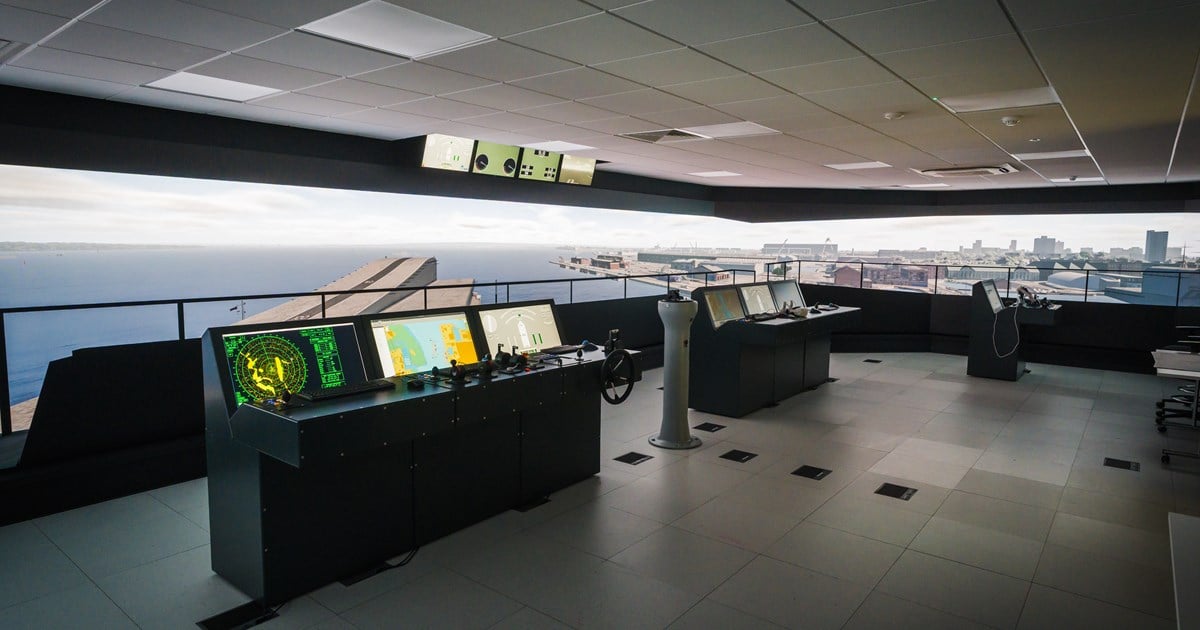
Transforming maritime simulation through immersive AV
A reimagined space allowing for maritime simulation training, as well as multiuse of the entire LED canvas.
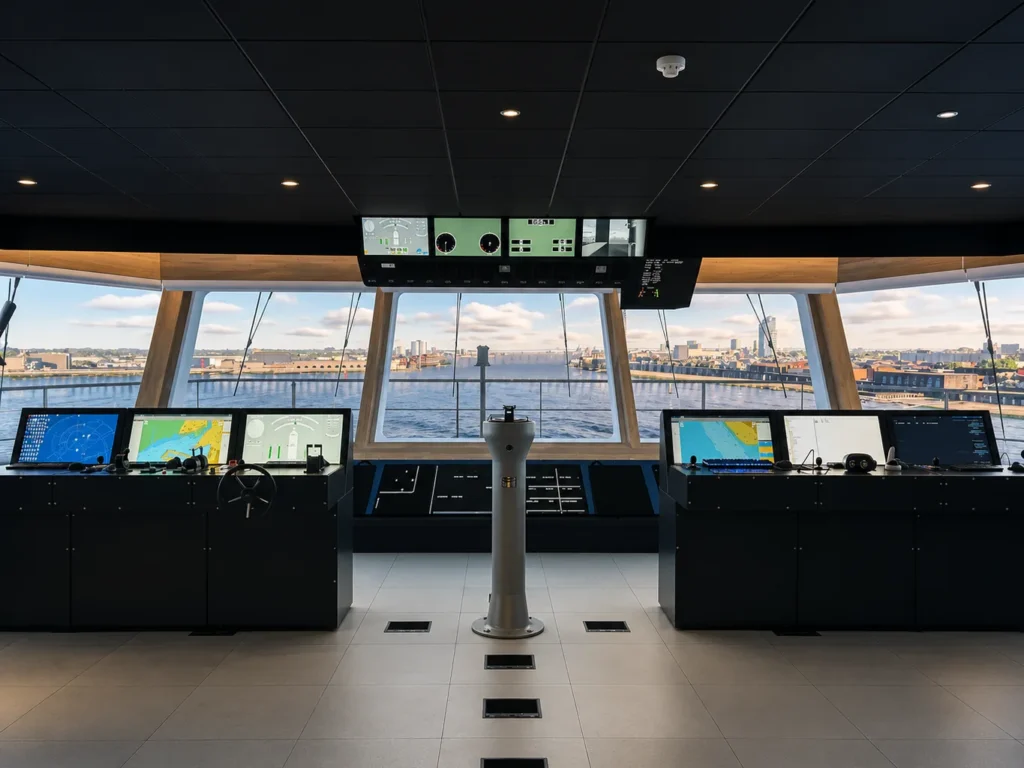
The simulator was the starting point..
A maritime engineering and consultancy group came to us to replace an ageing bridge simulator. What they actually wanted was larger than that: one flexible space where training, digital engineering, autonomous systems assurance and customer collaboration could happen in the same room, on the same day.
We designed and delivered an immersive LED simulation environment around that ambition. It has changed how the people who use it train, how they work together, and how confidently they make decisions.
The challenge
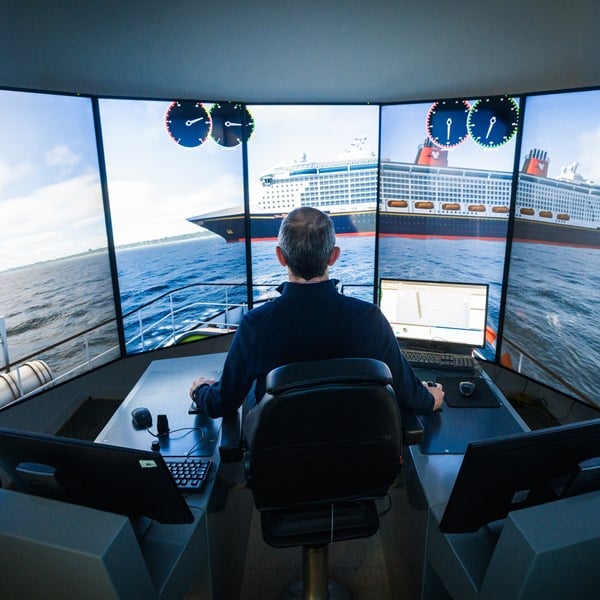
The previous simulator recreated the view from a ship’s bridge across several separate displays. It worked. But the joins between them cut the horizon into sections, and nobody standing on that bridge could quite forget they were looking at screens.
Simulation only does its job when a crew stops noticing the equipment and starts reacting the way they would at sea. Every visible edge is a reminder, and every reminder costs a little of the realism the training depends on.
The room also did one thing and nothing else, which is an expensive way to use a large space. So the brief grew. Not a replacement simulator, but an environment that could run bridge simulation in the morning, a design review after lunch and a customer demonstration the same evening, without being rebuilt in between.
Rethinking the solution
Projection was the obvious answer, and the wrong one. Ceiling height, heat, the maintenance a projected system needs over its life and the proposed bridge structure each counted against it. Individually they were problems to solve. Together they were a warning.
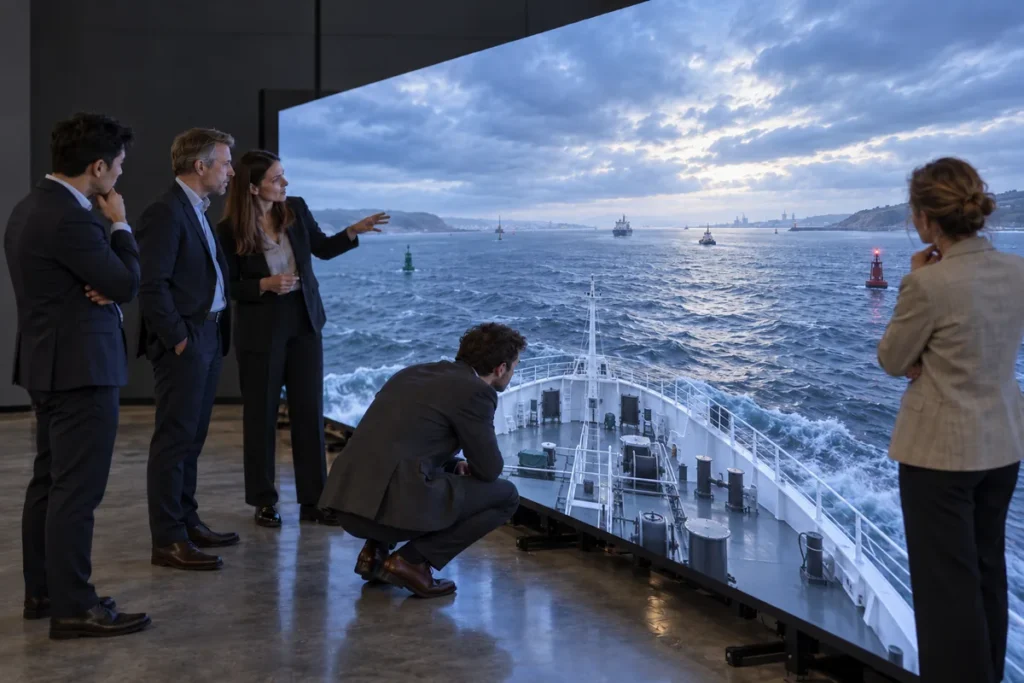
We proposed LED instead. Then, rather than asking anyone to take that on trust, we proved it. Before anything was ordered, the client saw fine pitch LED running in person. They compared pixel pitches with their own eyes rather than on a specification sheet, and watched their own simulation software driving a single seamless canvas.
That afternoon was the turning point in the project. It turned an argument about technology into a decision they could make with confidence.
Specification sheets do not change minds. Standing in front of it does.
Proving it before building it
More than twenty five design iterations followed, working through cabinet layout, supporting structure, power, ventilation, content mapping and installation tolerances long before anything arrived on site.
We then built the critical parts of the simulator away from site and ran it properly. Colour, viewing angles and the synchronisation of multiple render nodes were all validated while there was still time to change them. The largest technical risk in the project was closed out before installation began.
One decision changed the room completely. The physical bridge windows became digital, rendered into the simulation rather than built in front of it. That returned valuable floor space, and it means the bridge layout can change to suit whichever vessel is being modelled.
Have a space that has to do more than one job?
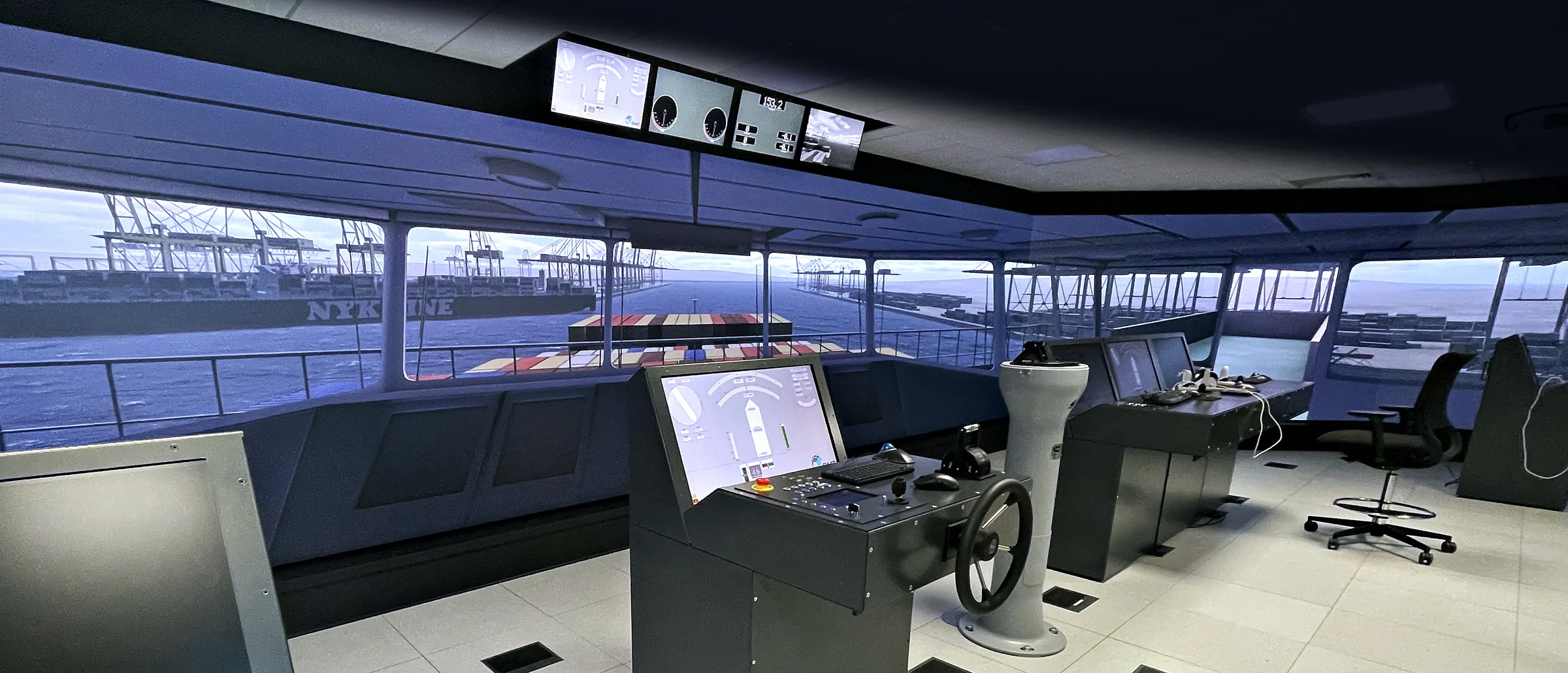
A seamless horizon
At the centre of the space is a 25 metre LED canvas: one continuous picture wrapping 270 degrees around the bridge, with no bezels, no joins and no projection shadows anywhere in it.
The effect is difficult to convey in writing. A crew navigating a busy port, running a transfer alongside another vessel or working in poor weather sees an unbroken view that behaves the way the sea behaves. Nothing in the picture reminds them where they are standing, so their attention goes where it should: on the decision, the handover and the handling of the ship.
Behind the bridge, large interactive displays carry the view aft during simulation and become collaboration screens the rest of the time. Further screens support the instructors, operators and scenario controllers who make a session work.
More than a simulator
The space moves between simulation, collaboration and presentation without being reconfigured, which is what turns a training room into an asset the whole organisation can use.
Bridge and pilot training
The job the room was bought for. Crews and pilots work a full passage in conditions nobody would choose to meet for the first time at sea.
Accident investigation
An incident can be rebuilt and replayed from the bridge it happened on, at the moment it happened, with everyone in the room seeing the same view.
Ship design reviews
A vessel can be walked and judged at full size while it is still a drawing, which is a great deal cheaper than finding the problem once it is in steel.
Digital twin visualisation
A working model of a real vessel, shown at the scale the vessel exists at rather than on a monitor, so the thing being discussed is in the room.
Autonomous vessel assurance
Where a vessel makes its own decisions, somebody has to watch those decisions and argue with them. The room puts people alongside the system while it runs.
Customer demonstrations
Explaining a capability takes a long time. Putting somebody inside it takes a minute, and they leave having seen it rather than having been told about it.
Collaborative design sessions
Anyone in the room can put their content on any screen, from a laptop on the table or straight off a phone with no cable at all. Nothing has to be booked or patched, and the discussion does not stop while somebody hunts for an adapter.
When the simulation ends, the bridge controls move aside and the room becomes, in the client’s own words, their boardroom of the future.
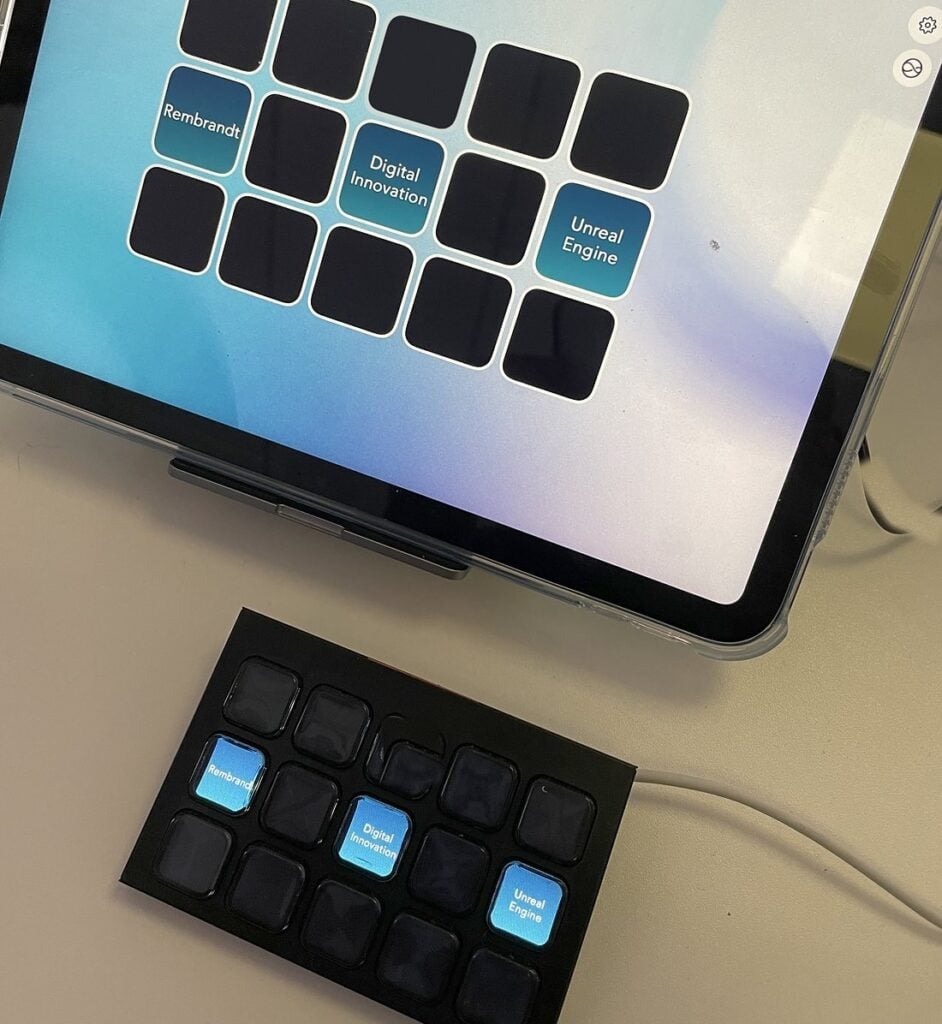
Technology that disappears
Despite the complexity behind the scenes, the experience for users is remarkably simple. Moving the room from simulation to presentation to collaboration takes a few button presses on either a small in wall control surface or via a tablet device.
Everything that has to happen behind that press happens on its own, and nobody in the room needs to know what any of it is. That is the part we are most pleased with. The technology stays out of the way of the people using it.
Any content. Any device. Any screen.
An ageing simulator has become a strategic asset. The facility supports training, digital engineering, customer engagement and innovation across the client’s defence, commercial maritime and environmental work, and it removes travel and real world testing that used to be unavoidable.
Two presses on the in wall keypad, or a tap on the tablet, and the room changes what it is doing. Simplicity and flexibility sit at the heart of it, which is what makes the space multi purpose rather than a simulator that occasionally does something else.
The most telling measure is not a figure. It is how people behave in the room. Experienced mariners engage with it instinctively, responding to what is in front of them as though they were at sea rather than inside a building.